

Why Spraying Drones Are the #1 Investment for 21st Century Farmers
Growers are currently navigating a historic financial squeeze: skyrocketing input costs vs. volatile commodity prices. In this environment, "good enough" ain’t gonna cut it! To survive and thrive, your operation needs precision, timing, and efficacy.
Backed by American research and real-world field data, here is why a spraying drone is the smartest investment you can make today.
Spoiler Alert: The most profitable path through your field is ten feet above it.
1. The Corn Fungicide Advantage: Scannable ROI
Most growers start with corn fungicide because the data is undeniable. When disease pressure hits, ground rigs are often sidelined by mud, and planes are often booked weeks out.
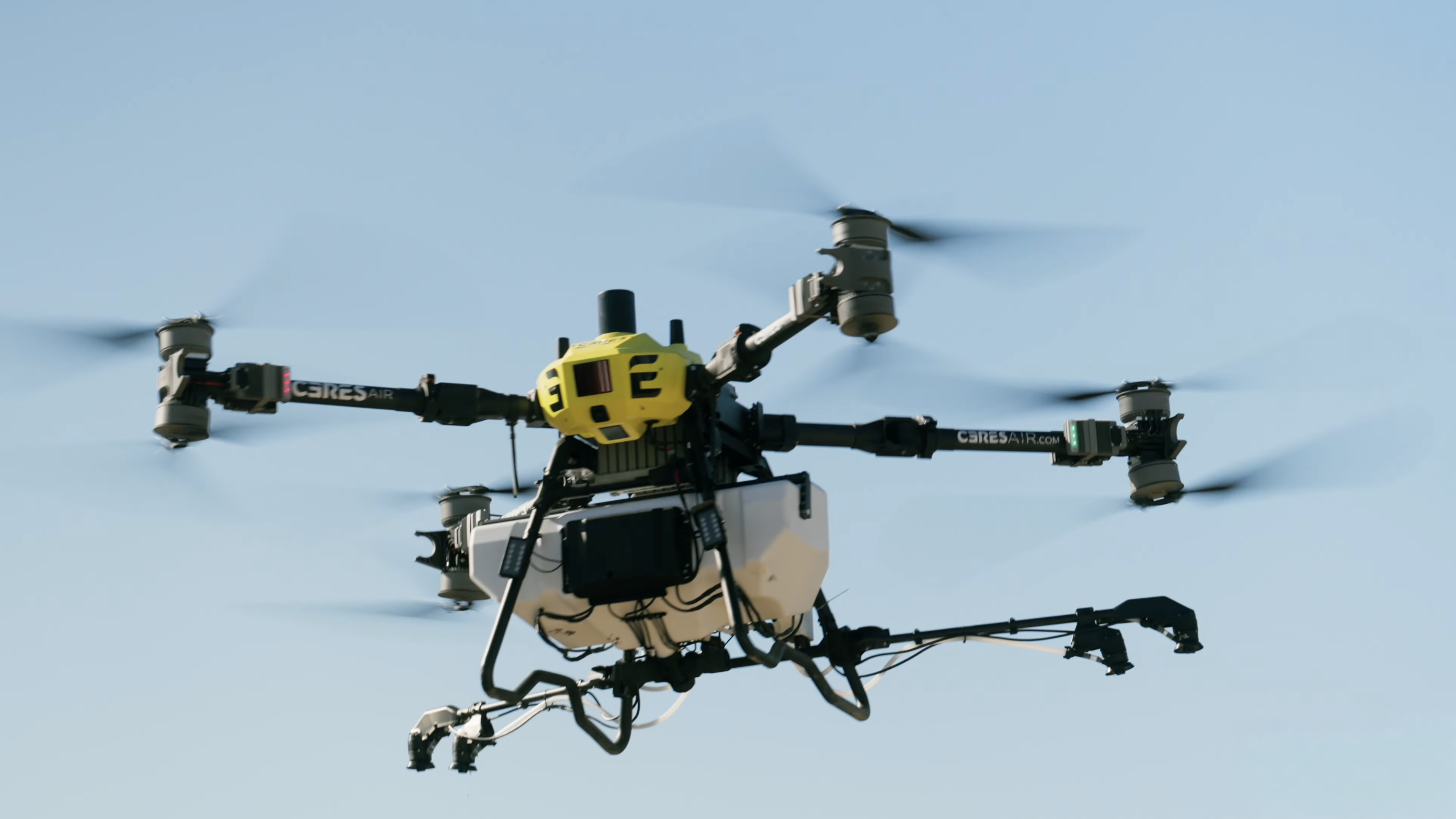
Raptor offers a versatile lineup of drones for any operation. In this blog, we’re highlighting the farmer-favorite Vector HD580. This spray drone is an absolute workhorse with available American-made software and super-fast charging.
The "Why" Behind the Buy
|
Feature |
HD580 Spray Drone |
Traditional Ground Rig |
Crop Duster |
|
Operating Weight |
~310 lbs (Loaded) |
20 - 25 Tons |
~5 - 8 Tons |
|
Working Speed |
20 - 35 mph |
10 - 15 mph |
120 - 150 mph |
|
Soil Impact |
ZERO Compaction |
5-10% Yield Loss |
ZERO Compaction |
|
Wet Field Access |
Immediate Service |
Must wait days |
YES |
|
Canopy Penetration |
Excellent (Downwash) |
Moderate |
Variable |
Research Highlight (John Deere & Beck's): John Deere Agronomic Insights observed a 3 to 9 bu/ac yield advantage with a one-pass fungicide program, and an additional 1 to 7.5 bu/ac gain with a two-pass program.²
The Beck's PFR ROI Breakdown
In a multi-year, multi-location study, Beck’s Practical Farm Research (PFR) compared the actual net return of different application methods in high-pressure disease environments:¹
-
Drone Application: $13.17 / Acre ROI
-
Ground Rig: $8.44 / Acre ROI
-
Crop Duster (Plane): $3.13 / Acre ROI
The $40,000 Payback Example
To put this yield data into perspective, let's look at a 1,000-acre operation. If a drone enables you to capture just a conservative 5 bu/ac of that "John Deere yield increase"—at a current corn price of $4.50/bu—you've generated $22,500 in revenue that would have otherwise stayed in the field.
When you factor in the avoided costs of custom application fees (averaging $12/acre) and the elimination of the 5-10% yield loss caused by tramline compaction, the entire $40,000 system pays for itself in a single season.
💡 Pro-Tip: The "2 Gallon" science. > People often wonder how 2 GPA can compete with 20 GPA. If you check your chemical labels, you will notice that aerial application requirements are significantly lower. Why? The extra carrier for ground rigs is simply added to accommodate slow travel speeds and keep diaphragm nozzles from clogging. Drones use rotary atomizers to create consistent, precise droplet sizes. This high-concentration, low-volume approach allows the plant to absorb the product more efficiently, whereas high-volume "soak" applications often result in product rolling off the leaf and onto the ground. The chemical manufacturer provides this instruction based on proven efficacy; trust the label!
The Bottom Line: Drones let you take control of spray day on your own schedule. When disease pressure is highest, you can capture that 16+ bushel potential without risking a stuck rig or creating permanent tramline losses.
2. The Physics of the "Downwash"
Why does 2 GPA from a drone beat 15 GPA from a rig? Aerodynamics.
-
Canopy Penetration: The Vector HD580’s massive props create a "Z-dimensional" downwash that actively opens the canopy.
-
Total Coverage: Turbulence drives droplets into the "V" of the plant and onto the undersides of leaves where pathogens hide (Research: Auburn & Mississippi State).⁴ ⁵
-
Drift Control: Flying at 10–12 feet at 25 mph creates a "curtain effect," driving droplets directly into the target crop (Research: USDA-ARS).³
💡 Pro-Tip: 24/7 Productivity. > Drones like the HD580 thrive in nighttime operations. Not only are winds typically calmer, but spraying at night allows you to avoid midday temperature inversions that trap small droplets in the air. By spraying when the air is stable, you maximize "on-target" placement while keeping your daytime hours free for other farm tasks.
The Bottom Line: Traditional spraying often misses the lower canopy where disease starts. Drones use physics to drive product through the leaves, ensuring every dollar of chemistry is actually doing its job.
3. High-Value Specialty Crops: Almonds, Grapes, & Apples
For specialty growers, a drone isn't just a sprayer; it's a structural solution.
-
Terrain Independence: Drones maintain a perfect height-above-canopy on 20%+ vineyard slopes where tractors risk rolling.
-
The "Small Tractor" Fallacy: Even a Kubota M-Series with an air-blast sprayer puts 6–10 tons on narrow tracks. Drones eliminate this "hardpan" creation entirely.
-
Labor Efficiency: Lower carrier volumes mean faster drying times. Get your picking crews back into the field hours earlier than traditional "soak" applications.
💡 Pro-Tip: Operator Health & Safety. > Traditional air-blast sprayers or backpacks subject operators to hours of "chemical mist" exposure, even with enclosed cabs. A study by Bayer Crop Science confirmed that drone applications reduce applicator exposure by over 100 times (>99%) compared to manual methods.⁷ By maintaining a safe, upwind distance, you virtually eliminate the inhalation and skin contact risks associated with ground-based application.
The Bottom Line: Drones solve the impossible logistics of steep hills and tight rows, preserving soil health and letting your labor crews get back to high-value work faster.
4. Pasture & Vegetation: Reclaiming "Lost" Acreage
Stop fighting canyons and draws on an ATV.
-
Stay Put: The pilot stays on level ground while the drone treats rocky, uneasy terrain.
-
Surgical Spot-Spraying: Link a scouting drone to your spray drone to detect unwanted vegetation and noxious weeds to treat only infested areas, saving 30-50% on chemical costs.
The Bottom Line: Drones turn "lost" acreage back into usable pasture. You can treat invasive species in difficult canyons without the physical risk of navigating hazardous terrain on the ground.⁶
Frequently Asked Questions
Do I need a special license to operate a spray drone?
Yes. To spray commercially (for hire) or on your own farm, you generally need an FAA Part 107 Remote Pilot Certificate and a Part 137 Agricultural Aircraft Operator Certificate. Additionally, most states require a pesticide applicator license with an aerial endorsement. Raptor Dynamic offers guidance programs to help you navigate these requirements quickly.
How much wind is "too much" for drone spraying?
Modern drones are incredibly stable and can physically fly in much higher winds than what is appropriate for application. However, for actual spraying operations, you should refer to your specific pesticide label to comply with legal wind limits. Generally, we look for a "sweet spot" (often 3–10 mph) that allows the propeller downwash to drive droplets effectively into the canopy. Conversely, spraying in dead calm air (0-2 mph) should be avoided to prevent issues with temperature inversions that can cause unintended drift.
How do you handle battery charging in remote fields?
Platforms like the Vector HD580 are designed for high-cycle, fast-charging environments. Most operators use a specialized 12,000W EFI generator on their trailer to charge one set of batteries while another set is in the air. This "rotation" allows for continuous operation with zero downtime. The ideal batteries you should buy varies by platform, terrain, ferrying distance and a few other factors. So talk to one of our experts for personalized guidance.
Won't the drone crash into power lines or trees?
Modern spray drones are equipped with 360-degree phased-array radar for obstacle detection. This allows the aircraft to "see" and automatically avoid obstacles like power lines, trees, and fence posts, even in complex terrain or at night. However, operators are encouraged to manually add all obstacles into their flight plan since these radar systems are not foolproof.
Raptor: Your Partners in the Pack
A drone is a tool; a Raptor Dealer is a partner. Through our nationwide network, we provide:
-
Selection: Picking the right platform (like the Vector HD580) for your specific crops.
-
Compliance: Helpful guidance with FAA Part 107 & 137 and state licensing info.
-
Stewardship: Training to ensure you are successful, and support way beyond the purchase.
The Bottom Line: When the spray window opens, you shouldn't be on your own. Raptor ensures you have the hardware, the training, and the support to make every flight count.
Citations & References
-
Beck’s Hybrids: 2024 Multi-Location Corn Fungicide Application Study (Ground vs. Drone)
-
John Deere: Agronomic Insights: Fungicide Protecting Yield – Corn (2022)
-
Auburn University: Optimizing Flight Parameters for Pesticide Application in Specialty Crops
-
Mississippi State University Extension: Influence of Downwash Airflow Distribution Characteristics


 "
"


