

Looking 10 Years Down the Propeller: A Few Wild (and Real) Predictions for the Agricultural Drone Industry
Let’s be completely honest for a second: writing a future predictions blog post about the agricultural drone industry is an absolute trap.
Ten years from now, someone is going to pull this article out of the digital archives. If I’m right, I’ll look like a genius. If I’m wrong, you’ll all be laughing at me over a cold beer while your fully autonomous, AI-driven, nuclear-powered spray drone does the dishes and tucks you into bed.
But here’s the thing—at Raptor Dynamic, we’ve earned the right to gaze into the crystal ball. Back in 2009, when my family started HSE, people thought drones were just expensive toys for tech geeks. In 2014, when we brought the very first agricultural spray drones to the American market, traditionalists looked at us like we had three heads. “Two gallons an acre? Spraying with a flying weed-whacker? Good luck, kid.”
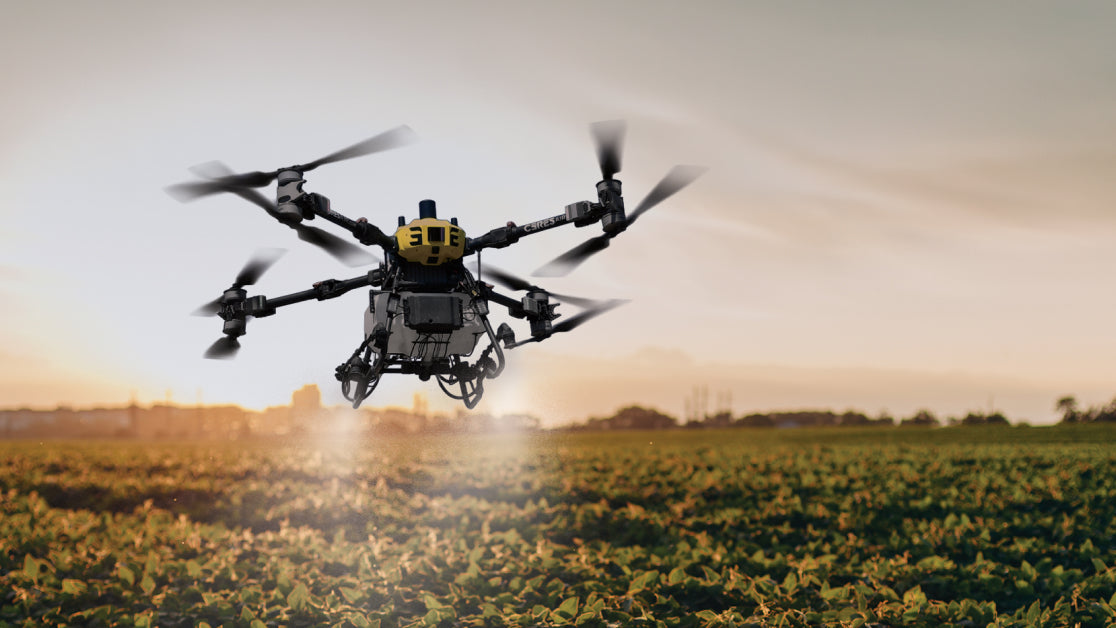
Fast forward to today. The "retro" drones we introduced over a decade ago paved the way for high-capacity systems like the Vector HD580 and Ceres Air systems. We went from a bold idea to a national pack of over 60 dealer locations because we saw the writing on the wall before anyone else.
So, with more than 15 years of dirt on our boots and data in our logs, what does the next decade look like? Cut through the marketing fluff and the shiny stickers—here is some real talk on where the drone industry is actually heading.
True Domestic Manufacturing Will Become the Standard
Right now, it seems like everyone is wrapping themselves in the American flag. American-made drones has become one of the industry’s biggest marketing messages, but let’s be real—half the time, it’s literally just a sticker slapped onto imported parts.
Ten years from now, that alone won’t be enough. The regulatory landscape and the demands of American growers are going to force the industry into genuine, ground-up domestic manufacturing. We are already seeing the vanguard of this with partners like Ceres Air, who are completely transparent about their timeline to being 100% US-made. By 2036, true domestic supply chains won’t be a competitive advantage; they’ll be the baseline standard for security, reliability, and staying compliant.
Precision Agriculture Will Drive the Next Wave of Regenerative Farming
Sustainability initiatives and regenerative agriculture programs continue to gain momentum across North America.The federal government just signed a massive Executive Order pouring hundreds of millions into the USDA's Regenerative Pilot Program. They are actively shifting funding frameworks to incentivize and back restorative, regenerative farming.
My prediction? Ten years from now, you won't just be using precision drones because they save you money on inputs (though they absolutely do). You’ll be using them because the government, the supply chain, and the consumer packaging markets will require exact, field-level data on your crop's carbon intensity and chemical reduction to qualify for premium crop prices. Agricultural drones are going to transition from a valuable efficiency tool to the absolute backbone of compliance for healthy, restorative farming.
From One Drone to Autonomous Fleets
Today, a farmer or a custom applicator stands in a field operating a single, high-capacity drone. It’s efficient, it beats tramline compaction, and the ROI is undeniable.
But looking forward? One pilot won't be managing one drone; they’ll be managing a synchronized pack. Picture a scout drone mapping a field in real-time using precision agriculture data for weed pressure, instantly feeding that data to a multi-drone spraying swarm that launches, treats the exact target zones, and returns to an automated docking station for a 10-minute smart charge—all while the operator monitors the metrics from the air-conditioned cab of a truck. Much of the hardware is already here; the next decade is all about scaling the ecosystem.
Beyond 2036: The Fully Automated Farm
If we dare look past the ten-year mark, the conversation stops being about the "drone" as an isolated piece of hardware and starts being about complete automation. We are talking about a future where agricultural drones are no longer manually deployed. They will be permanent, automated residents of the farm infrastructure. Automated, weather-resistant docking stations built right into the edges of your fields will house autonomous fleets that manage themselves. They will read real-time soil sensors, predict pest hatches before they happen, and run continuous, microscopic maintenance on your crops 24/7 without you ever having to press "start." The technology will become invisible because it will simply be part of how the farm breathes.
The agricultural drone industry has evolved faster over the past decade than almost anyone expected. As technology continues to improve, the conversation will become less about whether drones belong on the farm and more about how they fit into everyday operations. The operators and dealers who adapt early will be the ones best positioned to take advantage of what’s coming next.
LET THE COUNTDOWN BEGIN
So, bookmark this link. Set a calendar reminder for ten years down the road.
Maybe by then, we’ll be talking about hydrogen-fueled drones that can fly for six hours straight, or maybe we’ll realize that some of our wildest predictions were pure science fiction. Either way, Raptor is going to keep hunting, keeping our laser-focused focus on the growers and dealers who rely on this iron to make a living.
We’ve been helping shape this industry since 2009. We are not planning on stopping anytime soon.


 "
"


