
How Agricultural Drones Support Regenerative Agriculture (Without Breaking the Bank)
There’s a massive conversation happening across America right now about the future of our food system. Terms like "regenerative agriculture," "restorative farming," and "healthy food supply chains" are showing up everywhere, rom boardroom meetings to family dinner tables.
Recently the federal government put its money where its mouth is. With the USDA regenerative farming program launching its landmark $700 million Regenerative Pilot Program, the framework is shifting to reward farmers who voluntarily improve soil health, reduce chemical reliance, and optimize nutrient management.
For a lot of folks who have farmed the same way for generations, that can sound like one more government program telling them how to run their operation.
But here’s the real talk: regenerative agriculture doesn’t mean going backward to the horse and plow. It means moving forward with better technology, better data, and more precise applications. And the ultimate weapon on this new frontier? Regenerative agriculture drones.
The challenge isn’t convincing operators that healthy soil matters, they already know that. The challenge is finding practical ways to improve it without adding more labor, more passes across the field, or more cost. That’s where the agricultural drone is changing the conversation. Here are three ways agricultural drones are helping make regenerative agriculture more practical.
Cover Crop Seeding With Agricultural Drones
One of the foundations of regenerative agriculture s keeping a living root in the ground year-round through cover crops. It stops erosion, builds organic matter, and naturally fixes nitrogen into the soil.
But getting a cover crop established can be a logistical nightmare. If you wait until after harvest, the weather window might slam shut. If you use a massive ground rig, you risk trampling your standing, high-value cash crop.
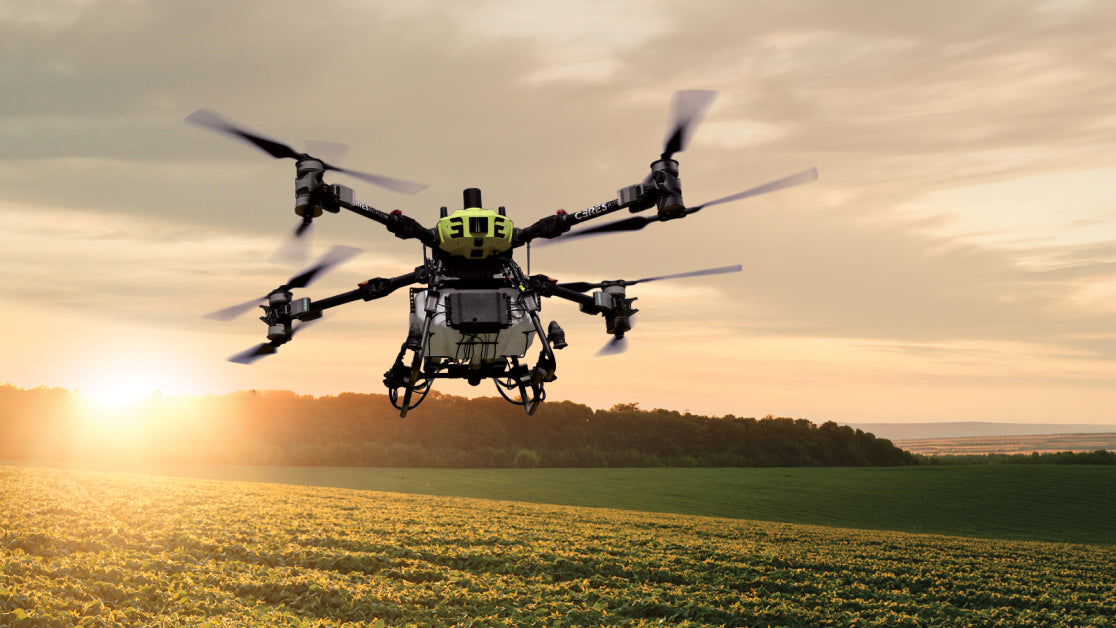
Enter the heavy-payload spray and cover crop seeding drone. With systems like the Vector HD580, farmers are broadcasting cover crop seed directly into standing corn or canopy crops before harvest. The drone flies completely above the crop, causes zero soil compaction, damages zero yield, and drops the seed with pinpoint accuracy. It allows farmers to improve soil health without sacrificing today’s crop or tomorrow’s profitability.
Precision Spraying: Sniper Accuracy Instead of Carpet Bombing
raditional farming has often relied on a blanket approach—if you have a pest or nutrient deficiency in one corner of the field, you spray the whole 160 acres just to be safe. It’s expensive, it’s inefficient, and it overloads the ecosystem.
Regenerative agriculture is built around improving soil and plant health while reducing unnecessary inputs. Agricultural drones make that level of precision practical.
-
First, a drone equipped with multispectral mapping scans the field, identifying the exact zones experiencing crop stress, weed pressure, or disease.
-
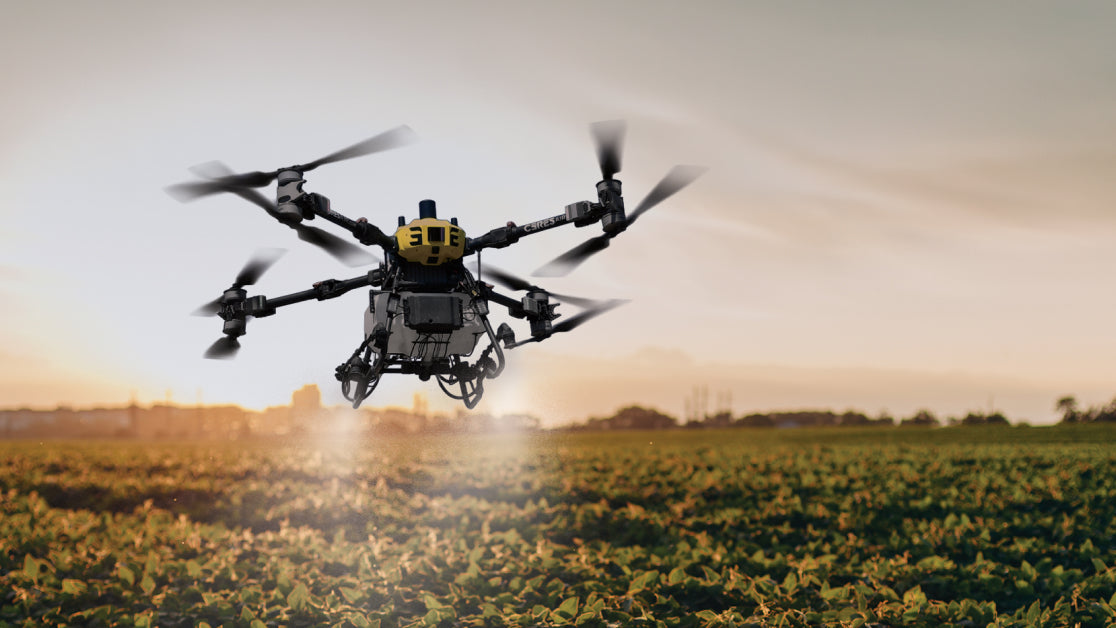
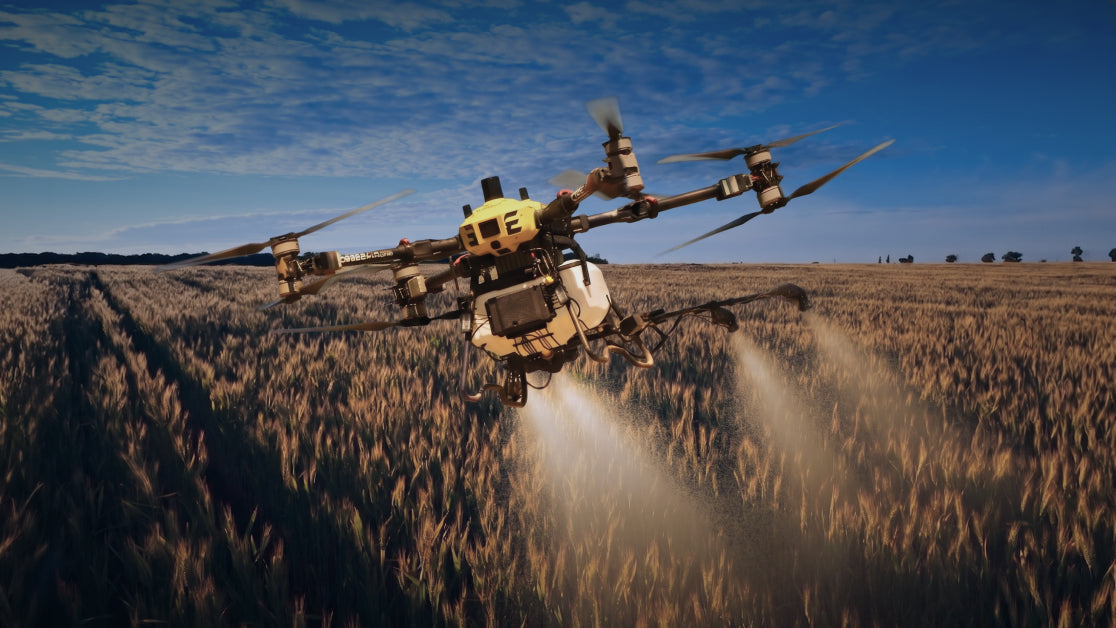
That information is then sent directly to an agricultural spray drone, which treats out and treats only those specific areas instead of the entire field.
By applying products only where they are needed, farmers dramatically reduce chemical runoff, lower input costs, and protect the beneficial biology that supports healthier soil.
Using Agricultural Drones to Document Regenerative Practices
As regenerative agricultural programs continue to evolve, documenting field practices is becoming increasingly important. Farmers are not just being asked to change their practices—they are being asked to demonstrate exactly what happened in the field. To earn premium prices for crops like corn, soy, and sorghum in the growing bioeconomy, you need field-level quantification of your crop’s carbon intensity.
You cannot track that with a notepad on the dashboard of your truck.
Drones are flying data-loggers. Every mission flown, every gallon applied, and every acre mapped generates a digital, unalterable receipt. Thatis precision data helps farmers document their work, support sustainability initiatives, and potentially qualify for future incentive programs and premium markets.
KEEPING WORKING LANDS IN WORKING HANDS At Raptor Dynamic, our mission has always been aligned with the core goal of this new agricultural push: Keeping working lands in working hands. Regenerative agriculture shouldn’t force farmers to choose between healthier soil and healthy margins. y combining proven soil management practices with precision drone technology, farmers can lower input costs, improve efficiency, and protect the land for future generations.
The future of precision agricultureof agriculture isn’t about choosing between productivity and sustainability, it’s about using better systems to achieve both. Agricultural drones are giving farmers practical ways to improve soil health while protecting the profitability their operations depend on.
The technology is ready. The funding is active. The pack is here to help you deploy it.
 "
"


