
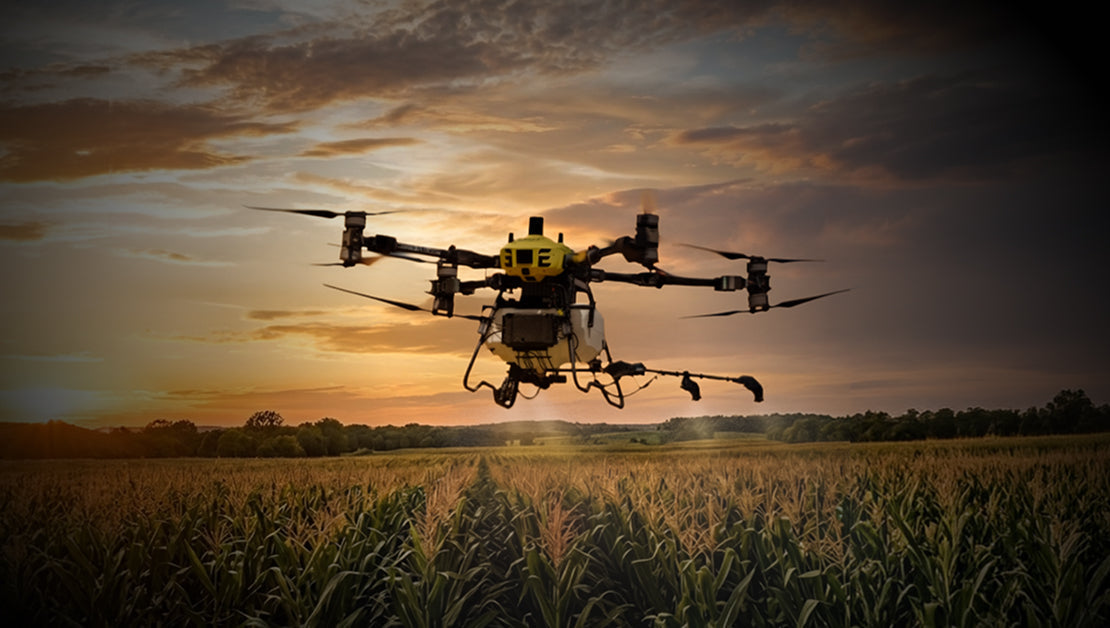
Agricultural Drone ROI for 2026
In agricultural operations, the window of opportunity for application is often measured in hours. When disease pressure rises or nutrient demands peak, a grower is typically faced with a logistical bottleneck: waiting on a custom applicator’s schedule or waiting for the soil to dry out enough to support a 20-ton ground rig. These delays aren’t just logistical hurdles,; they can have a measurable impact on seasonal margins.
At Raptor Dynamic, we focus on providing the tools that maximize your precision agriculture ROI and make every operation more profitable. Whether you’re managing a 100-acre family farm or a 1,000+ acre operation, the data for 2026 shows that the most efficient path for high-precision agricultural drone application is often ten feet above the crop.
The "Compaction Tax": Evaluating Precision Timing
Traditional ground rigs are reliable, heavy-duty machines that have been the backbone of American agriculture for decades. However, for late-season fungicide or specific crop spraying tasks, they can sometimes be a heavy-handed solution. As growers navigate a tighter financial environment, every pass must be evaluated for its long-term impact on soil structure and potential yield drag.
-
The Yield Drag: Field research indicates that ground rigs can cause a 5–10% yield loss due to soil compaction and wheel tracks in the field.¹
-
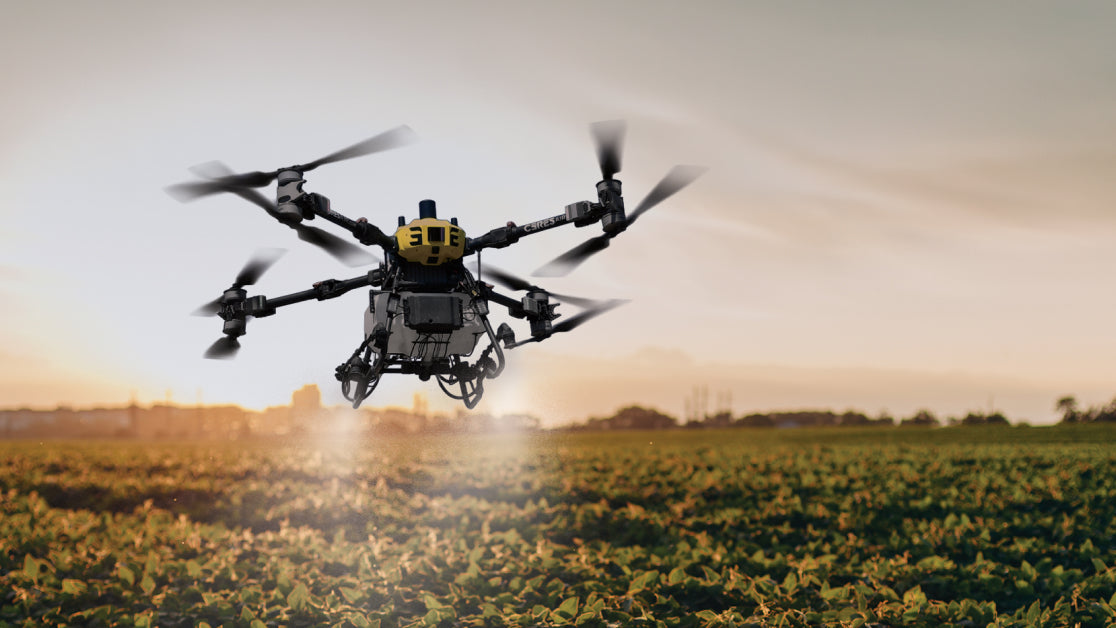
The Physics of Downwash: Agricultural drone platforms like the Vector HD580 create a "Z-dimensional" downwash created by the propellers. This air movement helps open the canopy, helping drive droplets onto the undersides of leaves where pathogens often originate—areas that are frequently missed by standard rigs or high-speed aerial applications.⁴ ⁵
Beyond the soil impact, there is the reality of the equipment itself. Many of the self-propelled rigs currently in operation are reaching the end of their optimal mechanical life cycle, typically estimated at 10 to 15 years or approximately 3,500 engine hours.¹¹ As these machines age, the cost of maintenance "creep" and the potential for downtime during critical spray windows increase. With new high-clearance rigs often priced between $500,000 and $750,000, many operations are finding that augmenting their fleet with a drone is a more capital-efficient way to extend the life of their existing iron while maintaining precision.¹¹
By the Numbers: The 2026 ROI Reality
Today’s agricultural spray drones have moved well beyond the experimental stage. Data from Beck’s Practical Farm Research (PFR) and John Deere Agronomic Insights identifies drones as a viable tool boosting your agricultural drone ROI and maximizing input efficacy.
|
Feature |
Traditional Ground Rig |
Crop Duster (Plane) |
||
|
Net Return (ROI) |
$13.17 / Acre¹ |
$13.50+ / Acre¹ |
$8.44 / Acre¹ |
$3.13 / Acre¹ |
|
Est. Operating Cost |
**$3.37 / Acre⁶** |
$4.15 / Acre⁶ |
$5.00 - $8.00 / Acre |
$10.00 - $15.00 / Acre |
|
Labor Requirement |
**~$2.50 / Acre (2-Man Crew)⁸ ⁹** |
~$1.85 / Acre (2-Man Crew)⁸ ⁹ |
~$0.45 / Acre (1 Driver)¹⁰ |
~$0.60 / Acre (1 Pilot)¹⁰ |
|
Soil Impact |
ZERO Compaction |
ZERO Compaction |
5–10% Yield Loss¹ |
ZERO Compaction |
|
Wet Field Access |
Immediate |
Immediate |
Requires dry soil |
Yes (if available) |
|
Max Takeoff Weight |
308.6 lbs (Spraying) |
537.2 lbs (617 lbs Pending¹²) |
20 - 25 Tons |
5 - 8 Tons |
Note: Operating costs include generator fuel, battery depreciation (approx. 1,000–1,500 cycle lifespan), and routine maintenance.⁶ ⁷ Labor costs are national averages for a Pilot/Visual Observer (VO) team for drones, and specialized single-operator rates for traditional machinery.⁹ ¹⁰
Scaling the Operation: Selecting the Right Tool
For the 100-Acre Operator: The priority is often flexibility and autonomy. The Vector HD580 is a mid-size agricultural drone designed for this scale. With an 18.5-gallon (70L) tank and 10-minute fast-charging, it allows a grower to manage their own applications on their own timeline, rather than waiting on someone else’s schedule.
For the 1,000+ Acre Enterprise: Logistics and throughput drive the ROI at this scale. The Ceres Air Black Betty Stacked is a heavy-lift agricultural drone platform currently operating with an FAA-approved 31.7-gallon (120L) tank, with a 40-gallon (151L) upgrade currently pending final regulatory clearance. The domestic software platform developed
by Ceres Air addresses potential compliance issues ahead of the 2027 FCC software freezes affecting non-domestic platforms, ensuring that your data and aircraft remain supported and operational.
The Compliance Advantage: Protecting Long-Term ROI
Investing in an agricultural drone platform today means looking ahead to 2027. The upcoming FCC software freeze on foreign-made platforms creates a risk of "forced obsolescence." If your software is frozen, you may lose access to critical bug fixes, security patches, and performance updates that keep your aircraft flying efficiently.
By choosing a domestic-first platform like the Ceres Air Black Betty, you are essentially securing your investment for the long haul. Because the software is developed and supported in the U.S., it bypasses these regulatory hurdles, helping ensure your fleet stays current with the latest features and safety protocols. In terms of ROI, this means your equipment remains a productive asset for its entire mechanical lifespan, rather than becoming a liability the moment a new regulation hits.
Future-Proofing with "The Pack"
The drone industry evolves rapidly, and reliability is earned through years of field support, not marketing claims. We have been supporting agricultural drone platforms since the early days of the industry, starting with HSE in 2009. We have seen which brands hold up under pressure and which ones don't. When you select an airframe like the HD580 or the Black Betty, you aren't just buying hardware; you're accessing a support infrastructure that spans the country.
Reliability Built on Experience
At Raptor, our reputation is on the line every time a piece of equipment leaves our shop. We are independent and transparent—we help growers find the drone that fits their specific operation rather than forcing a one-size-fits-all solution. We distribute the Vector and Ceres Air agricultural drone platforms lines because they have proven their reliability in the real world.
To back that up, we maintain 60+ local service centers across North America. By keeping critical parts on-site and technicians ready to roll, we aim to bypass the supply chain bottlenecks that can ground an operation during the most critical weeks of the season.
Spray windows are tight and the compaction tax is real. If you’re ready to take back control of your drone application timing, improve your agricultural drone ROI, and keep more of your hard-earned dollars, contact one of our experts. With local experts across the nation, you’ll hear honest, experience-based advice from people who know the struggle. We’ve been here for the last decade, and we look forward to being in your corner for the decades to come.


 "
"


